
 |  | Translated by Marta Campbell |
 |
14.04.2026 08:00 Uhr |
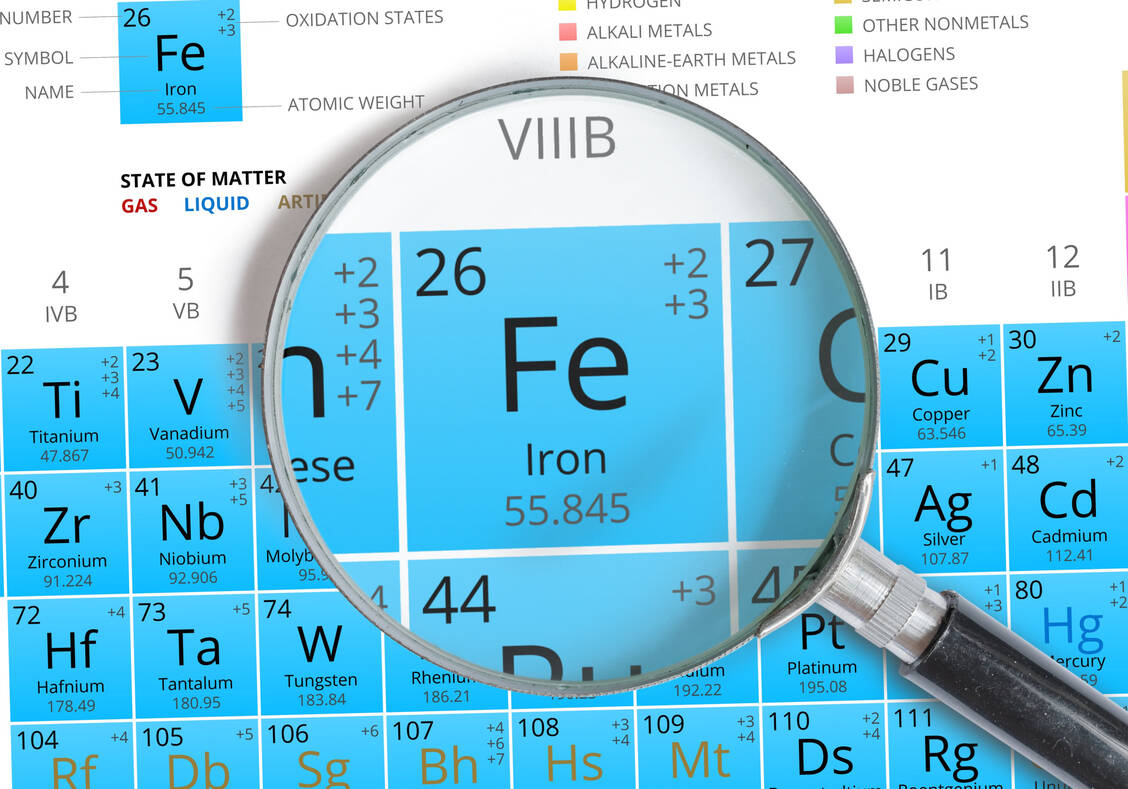
One of the first steps for the doctor is to assess iron metabolism. / © Adobe Stock/vchalup
Restless Leg Syndrome, that agonising restlessness in the legs which often robs pregnant women and older people of a good night’s sleep, was misinterpreted as a mental disorder in earlier centuries, according to an expert at a German Geriatric Society (DGG) event.
As stated by PD Dr. med. Moritz Brandt, Chief Physician at the Clinic for Geriatrics and Neurology in Meissen, speaking at a German Geriatric Society training event, Restless Leg Syndrome (RLS) is one of the most common neurological disorders. The overall prevalence stands at 9 per cent; among people over 65, 15 out of 100 suffer from restless legs. It affects women significantly more often, and particularly those who have given birth. As a rule, the more pregnancies, the higher the risk. Childless women, on the other hand, do not develop the condition any more frequently than men. In more than half of those affected, there is already a family history of the condition; genetic risk variants are known. RLS occurring early in life is more likely to be of genetic origin; the later the condition appears, the more likely it is to result from comorbidities. According to Brandt, these include not only iron deficiency but also renal insufficiency, polyneuropathy, Parkinson’s disease and depression. All of these can influence RLS, or in some cases also complicate the diagnosis. The former classification into primary and secondary RLS is now obsolete.
Another potential trigger of RLS is medication. In this context, the expert cited neuroleptics, antidepressants such as mirtazapine, citalopram and venlafaxine, antihistamines, as well as stimulants such as caffeine and alcohol. For the diagnosis of RLS, Brandt listed five essential criteria: first and foremost, an urge to move the legs, usually associated with sensory disturbances of varying quality. This urge occurs exclusively at rest or
when relaxed; it improves, or at least does not get worse, with movement; it follows a circadian rhythm with symptoms occurring mainly in the evening and at night, and the condition cannot be explained by symptoms of other possible medical diagnoses, behavioural conditions or medications.
In addition, a positive family history, a response to dopaminergic therapy and so-called periodic limb movements in the sleep laboratory can support the diagnosis. Brandt presented the recording of a patient in a sleep laboratory; the number of periodic limb movements was alarmingly high. Each time this occurs, the recorded brain waves also change, in the sense of a brief arousal reaction. No wonder that RLS can be a significant cause of severe sleep disturbance. Incidentally, those affected do not always realise that their brain is constantly being jolted out of sleep at night by the leg movements. They only notice that they feel unrested and tired during the day.
Patients with RLS can also be recognised by their inability to describe the typical abnormal sensations in their legs precisely. The language seems to lack the appropriate words. If, on the other hand, people describe pain, then it is generally not RLS, according to Brandt. Polyneuropathy can resemble RLS in its symptoms and must diagnostically be ruled out.
How is RLS treated? Whilst many GPs are aware that iron deficiency can play a decisive role in the aetiology, what may be new is that cerebral iron metabolism is of particular importance. The expert explained: ‘The availability of iron in the brain is crucial for dopamine synthesis’. Therefore, one of the first steps for the doctor is to assess iron metabolism. To do this, they measure ferritin, transferrin, transferrin saturation and iron. According to Brandt, a ferritin level below 75 micrograms per litre and a transferrin saturation below 20 per cent indicate a relative iron deficiency. These values should be above these levels whenever possible.
In cases of mild RLS and relative iron deficiency, iron is administered orally, specifically 80 to 100 mg of iron plus 100 mg of vitamin C twice daily over a period of twelve weeks. In cases of severe RLS or intolerance to oral administration, patients are usually given whilst in hospital either a single 1000 mg dose of ferrocarboxylmaltose intravenously or two 500 mg doses. A check-up is carried out after twelve weeks.
Anaemia does not always manifest itself; an iron deficiency may nevertheless be present and is particularly significant in the case of RLS. In this so-called functional iron deficiency in the central nervous system, iron, being a key factor for adequate dopamine synthesis, is lacking precisely there. Important: Treatment with iron for RLS should not be undertaken on one’s own initiative, but always based on a medical diagnosis.
If the iron metabolism is normal, doctors use dopamine agonists such as pramipexole, ropinirole or rotigotine as the first-line treatment. Off-label, gabapentinoids are used, namely gabapentin and pregabalin. The second-line treatment is oxycodone/naloxone.
| German | English |
|---|---|
| Aufwachreaktion | arousal reaction |
| Beine | legs |
| Beinbewegung | leg movement |
| Bewegungsdrang | urge to move |
| Depressionen | depression |
| Dopaminsynthese | dopamine synthesis |
| Eisen | iron |
| Eisenmangel | iron deficiency |
| Eisenstoffwechsel | iron metabolism |
| Familienanamnese | family history |
| Missempfindungen | abnormal sensations |
| Niereninsuffizienz | renal insufficiency |
| Polyneuropathie | polyneuropathy |
| Schlaflabor | sleep laboratory |
| Schlaflosigkeit | insomnia |
| Schmerzen | pain |
| Schwangerschaft | pregnancy |
| Unruhe | restlessness |
| Zentrales Nervensystem | central nervous system |
| Zirkadianer Rhythmus | circadian rhythm |


