|  | Translated by Marta Campbell |
 |
19.01.2026 16:00 Uhr |
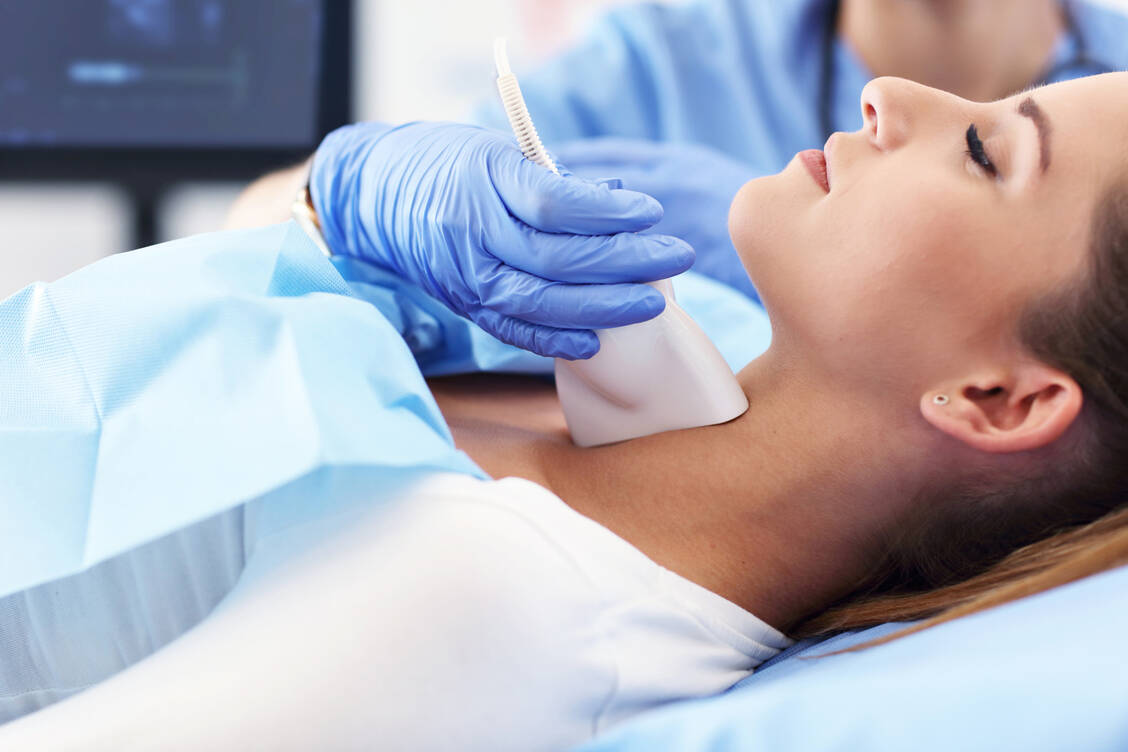
An ultrasound examination for swollen lymph nodes should be left to a doctor who has a high standard of ultrasound examinations. / © Adobe Stock/Kalim
The approximately 500 lymph nodes in the human body are part of the lymphatic system, which also includes lymph vessels, the spleen, and the tonsils of the throat and palate. This system, which unlike the bloodstream is not a closed circuit, transports lymphatic fluid. This fluid forms when pressure from the blood forces liquid out of the blood capillaries into the space between cells, which is known as the interstitium. Muscle movement and breathing drive the fluid into the main lymphatic ducts, from where it enters the venous system.
Lymph nodes are found throughout the body; an adult has around 500 of them. If they lie close beneath the skin—such as in the neck, nape of the neck, armpits, and groin—they can be felt when they swell. Lymph nodes inside the body, near internal organs, cannot easily be felt when they swell.
Lymph nodes filter the two to three liters of lymphatic fluid produced daily, screening for harmful components such as viruses, bacteria, or cancer cells. They also ensure that lymphocytes mature and multiply. When lymphocytes recognize pathogens, they multiply significantly and the lymph node swells. B lymphocytes differentiate into plasma cells, which produce countless antibodies against the invader.
Lymph nodes usually swell because they are dealing with viruses. In such cases, they generally subside again within two to a maximum of four weeks. They may also enlarge briefly, for example under the armpit after a shaving injury, if there is a wound on the hand or arm, or after an insect bite.
If an infection persists — for example in the area of the teeth — or repeatedly returns, the immune response in the lymph nodes does not calm down. Autoimmune diseases such as lupus erythematosus, rheumatoid arthritis, or (rarely) Sjögren’s syndrome can also have a lasting effect on lymph nodes. Rarely, cancer may be the underlying cause.
If a lymph node does not shrink for more than four weeks, feels hard when palpated, cannot be moved, and is usually not painful, a doctor should investigate the possible cause. If lymph nodes in the abdominal area swell, symptoms such as abdominal pain, digestive problems, nausea, and vomiting may occur. Sometimes, however, an affected lymph node may only appear as a small, hard lump.
Cancer cells—either originating directly in the lymph node from degenerated lymphocytes (lymphoma) or spreading to the lymph nodes from a primary tumor—multiply, displace healthy cells, and can form metastases. As a result, the lymph node swells and hardens.
If a lymph node is immobile, hard, painless, and possibly larger than 1.5 centimeters on ultrasound and has an altered shape, a biopsy may be used to determine the cause. This procedure carries risks: malignant cells may enter the bloodstream during the biopsy, and the tissue sample taken may not contain cancer cells by chance even though they are present elsewhere in the lymph node. Therefore, patients should always discuss carefully with their doctor whether this measure will be medically beneficial in their specific case.
This becomes necessary whenever there is a strong suspicion of a tumor or when a lymph node does not shrink, even after antibiotic therapy, and no cause such as a dental infection can be identified. A strong suspicion of cancer is also supported by the presence of so-called B symptoms, such as weight loss, night sweats, possible fever, and/or loss of appetite.
The absence of a single lymph node does not impair the body’s immune defense. However, if several lymph nodes must be removed, immune function may be affected. To minimize surgical risks and consequences such as lymphedema, nerve damage, and restricted mobility, doctors remove only the so-called sentinel lymph node whenever possible. This is the lymph node closest to the primary tumor.
| German | English |
|---|---|
| Achselhöhle | armpit |
| Biopsie | biopsy |
| Blutbahn | bloodstream |
| Entzündung | inflammation |
| Gewebeprobe | tissue sample |
| Hals | neck |
| Hart | hard |
| Infektion | infection |
| Krebsverdacht | suspected cancer |
| Lymphknoten | lymph node |
| Lymphödem | lymphedema |
| Nacken | nape of the neck |
| Nebenschilddrüse | parathyroid gland |
| Primärtumor | primary tumor |
| Schmerzhaft | painful |
| Schwellung | swelling |
| Verschiebbar | movable |
| Wächterlymphknoten | sentinel lymph node |
| Wunde | wound |
| Zahnentzündung | dental infection |