|  | Translated by Marta Campbell |
 |
07.08.2026 12:00 Uhr |
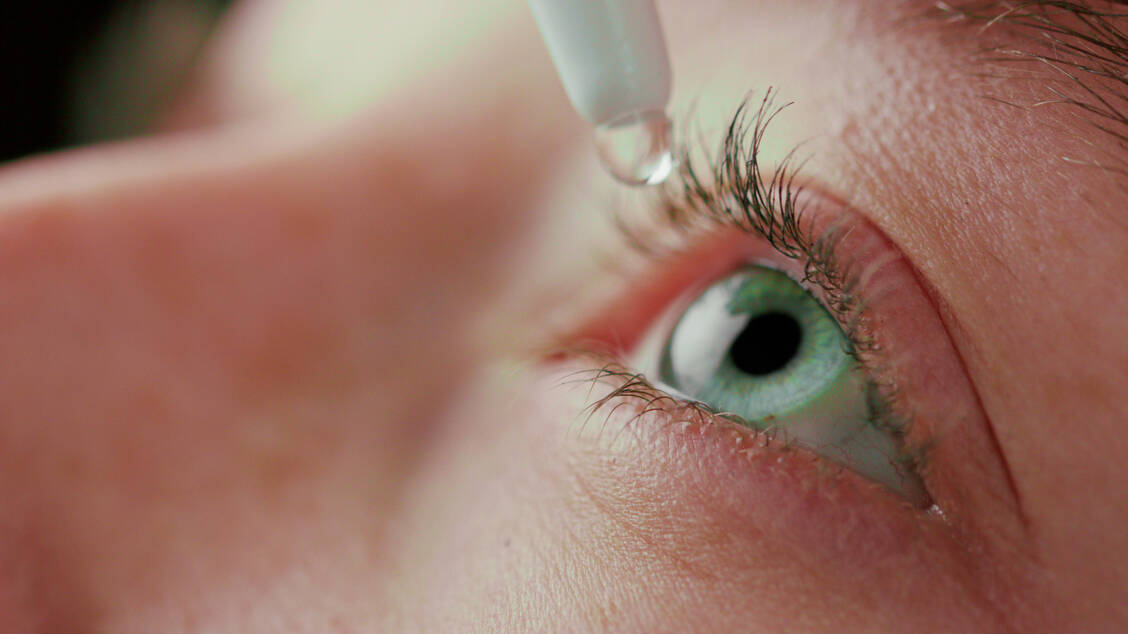
Sudden dry eyes or even a stye can sometimes be quite severe and may spoil your holiday. / © Adobe Stock/mputsylo
One of the illnesses that tends to strike precisely when you least need it is a bladder infection. Swimming in cooler water, then staying in a wet bikini, and perhaps even having sex more often with your partner – these factors can trigger a bladder infection. How can you prevent it? Always slip into dry clothes straight away when you get out of the water. Also, drink plenty of fluids; go to the toilet after sex and drink two large glasses of water.
However, if symptoms such as a burning sensation when passing urine, a constant urge to urinate or cramps occur, women who frequently suffer from bladder infections should carry a doctor-prescribed antibiotic as a preventative measure. Everyone else can help to alleviate the inflammation by taking ibuprofen, dissolving and drinking sachets containing D-mannose and cranberry, and taking herbal medicines containing extracts of centaury, lovage root and rosemary leaves (for example, Canephron®). Preparations containing bearberry leaf extract or arbutin may also be helpful, as may those containing plants rich in mustard oil glycosides or goldenrod to flush out the urinary tract.
Another example: haemorrhoids or an anal vein thrombosis. This has long ceased to be an issue at home, as you’ve successfully ensured regular bowel movements through your diet, but whilst on holiday, the unfamiliar food triggers constipation once again. All too quickly, the vascular cushions in the rectum – which were thought to have disappeared – can reclaim more space due to the pressure exerted during a ‘bowel movement’ and cause discomfort. An anal vein thrombosis makes itself felt particularly unpleasantly in an acute form. It also manifests as a blood clot, ranging in size from a pinhead to a plum, in a superficial vein at the edge of the anus when strong pressure is applied.
Even though it is medically harmless, it can cause severe discomfort. It can be felt as a lump. What helps? Anyone who, for example, takes psyllium husks daily in the morning at home, or ground linseed or similar, should ideally take these with them on holiday and continue their usual morning intake, adding a further dose before lunch and/or dinner if necessary. However, it is essential to take these with plenty of water and to drink regularly throughout the day.
For acute cases, your luggage should include a rectal ointment containing lidocaine or quinisocaine, as its local anaesthetic effect can quickly relieve the pain, as well as heparin ointment or gel. If the ointment is rubbed into the blood clot two to four times a day for a few days, anal venous thrombosis usually resolves quickly.