|  | Translated by Marta Campbell |
 |
07.08.2026 12:00 Uhr |
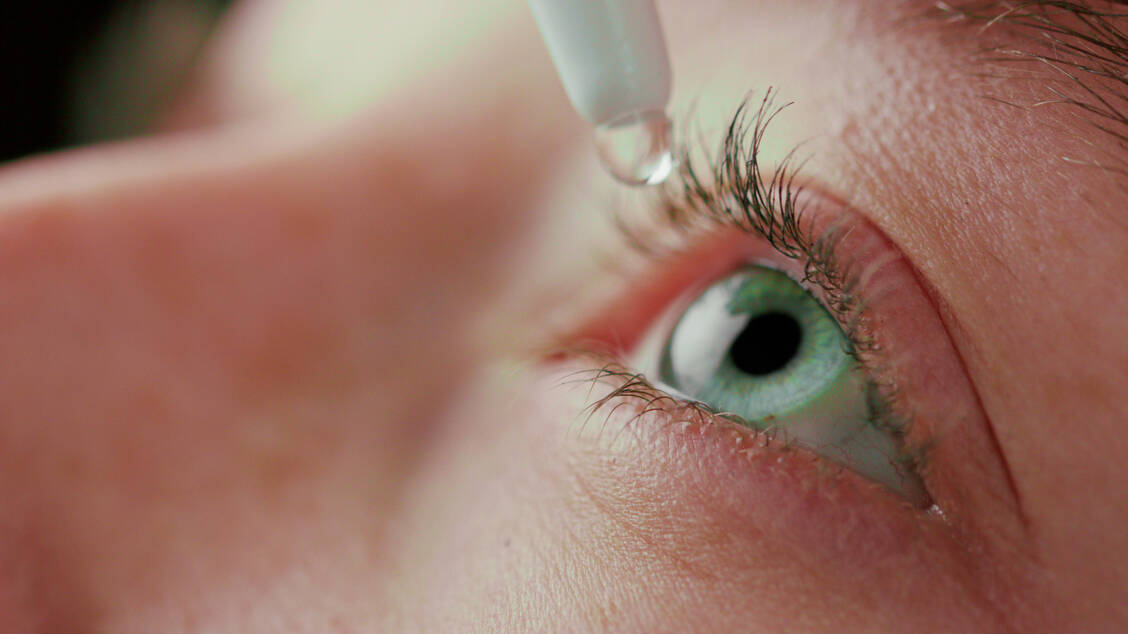
Sudden dry eyes or even a stye can sometimes be quite severe and may spoil your holiday. / © Adobe Stock/mputsylo
One of the illnesses that tends to strike precisely when you least need it is a bladder infection. Swimming in cooler water, then staying in a wet bikini, and perhaps even having sex more often with your partner – these factors can trigger a bladder infection. How can you prevent it? Always slip into dry clothes straight away when you get out of the water. Also, drink plenty of fluids; go to the toilet after sex and drink two large glasses of water.
However, if symptoms such as a burning sensation when passing urine, a constant urge to urinate or cramps occur, women who frequently suffer from bladder infections should carry a doctor-prescribed antibiotic as a preventative measure. Everyone else can help to alleviate the inflammation by taking ibuprofen, dissolving and drinking sachets containing D-mannose and cranberry, and taking herbal medicines containing extracts of centaury, lovage root and rosemary leaves (for example, Canephron®). Preparations containing bearberry leaf extract or arbutin may also be helpful, as may those containing plants rich in mustard oil glycosides or goldenrod to flush out the urinary tract.
Another example: haemorrhoids or an anal vein thrombosis. This has long ceased to be an issue at home, as you’ve successfully ensured regular bowel movements through your diet, but whilst on holiday, the unfamiliar food triggers constipation once again. All too quickly, the vascular cushions in the rectum – which were thought to have disappeared – can reclaim more space due to the pressure exerted during a ‘bowel movement’ and cause discomfort. An anal vein thrombosis makes itself felt particularly unpleasantly in an acute form. It also manifests as a blood clot, ranging in size from a pinhead to a plum, in a superficial vein at the edge of the anus when strong pressure is applied.
Even though it is medically harmless, it can cause severe discomfort. It can be felt as a lump. What helps? Anyone who, for example, takes psyllium husks daily in the morning at home, or ground linseed or similar, should ideally take these with them on holiday and continue their usual morning intake, adding a further dose before lunch and/or dinner if necessary. However, it is essential to take these with plenty of water and to drink regularly throughout the day.
For acute cases, your luggage should include a rectal ointment containing lidocaine or quinisocaine, as its local anaesthetic effect can quickly relieve the pain, as well as heparin ointment or gel. If the ointment is rubbed into the blood clot two to four times a day for a few days, anal venous thrombosis usually resolves quickly.
Unfamiliar conditions such as strong sunlight, light reflection from the sea or mountains, and exposure to large amounts of (salt) water can also impair the lubrication of the eyes with tears. Sudden dry eyes or even a stye can sometimes be quite severe and may spoil your holiday. That is why you should always pack artificial tears in your luggage, preferably those with a higher viscosity and free from preservatives.
To prevent a stye or inflammation of the eyelid margin, gently wipe the upper eyelid towards the bridge of the nose several times each evening using a cotton pad soaked in warm water. The water can be tap water, provided it meets safe drinking water standards in your holiday destination. If a stye has formed or the eyelid margin has become inflamed, it is best to consult an ophthalmologist in your holiday destination to decide which medication is advisable, even if you could obtain it from a pharmacy without a prescription.
Herpes flares up easily under heat stress, as UV rays weaken the local immune defences. This encourages the spread of pre-existing herpes viruses along the nerve pathways, leading to the formation of those troublesome blisters. Sunburn also contributes to an outbreak, as it puts strain on the thin skin of the lips. The risk of an outbreak can be reduced by protecting the skin of the lips and the surrounding area with a lip balm containing a high sun protection factor. If, however, you start to feel that ominous tingling sensation, pharmacy technicians can recommend suitable topical antiviral medicines for your first-aid kit, as well as herpes plasters to protect the affected area, and herbal preparations, such as those containing docosanol or zinc sulphate.
Important: People with a chronic illness should take twice the amount of medication they would normally need for the duration of their trip. When travelling by air, it is advisable to find out in advance about the rules on carrying liquids and syringes. Furthermore, temperature-sensitive medicines, such as insulin, should be carried in your hand luggage, as it is too cold in the hold.
| German | English |
|---|---|
| Analvenenthrombose | Anal vein thrombosis |
| Augenarzt | Ophthalmologist |
| Blasenentzündung | Bladder infection |
| Dauermedikation | Long-term medication |
| Durchfall | Diarrhoea |
| Flugreise | Air travel |
| Frachtraum | Hold |
| Gepäck | Luggage |
| Gerstenkorn | Stye |
| Hämorrhoiden | Haemorrhoids |
| Herpes | Herpes |
| Koffer | Suitcase |
| Konservierungsmittel | Preservatives |
| Lichtschutzfaktor | Sun protection factor |
| Lidrandentzündung | Blepharitis |
| Reise | Travel |
| Sonnenbrand | Sunburn |
| Tränenflüssigkeit | Tear fluid |
| Urlaub | Holiday |
| Verstopfung | Constipation |